
'Their functioning is flawed, they are not accountable, they are opaque, they are non-transparent, they have lost credibility.'

Rahul Gandhi has convened a high tea for INDIA bloc MPs to discuss a strategy for joint protests against alleged "vote theft" and to demand the resignation of Chief Election Commissioner Gyanesh Kumar. This meeting follows a "March for Democracy" by opposition leaders and activists to the Supreme Court, where they filed a petition challenging alleged poll irregularities.

Shiv Sena (UBT) leader Sanjay Raut has ignited a controversy by suggesting India should learn from Albanian protesters who allegedly burnt down their Supreme Court due to its perceived support for a corrupt prime minister. Raut shared a video of the purported events, drawing sharp criticism from Shiv Sena leader Sanjay Nirupam, who highlighted Raut's recent apology to the Supreme Court.

The Supreme Court has dismissed a plea by the Mamata Banerjee-led TMC faction to operate four debit-frozen bank accounts, upholding a Calcutta High Court order. The accounts, holding around Rs 804 crore, are under investigation due to alleged cash deposits and a factional dispute within the party. The court noted the Election Commission's symbol freeze and requested the High Court to expedite the larger adjudication.

Senior Trinamool Congress leader Kalyan Banerjee has commented on the Supreme Court judgment regarding the Special Intensive Revision (SIR) of electoral rolls, emphasising its specific application to the Bihar case and highlighting the Election Commission's limited authority in determining citizenship.
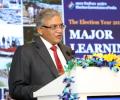
A petition has been filed in the Supreme Court challenging Chief Election Commissioner Gyanesh Kumar over alleged statutory duty violations and the controversial deletion of 13 crore voters during the Special Intensive Revision of electoral rolls, claiming decisions were made without the concurrence of other election commissioners.

Opposition MPs from the INDIA bloc, including prominent leaders like Rahul Gandhi and Priyanka Gandhi Vadra, marched to the Supreme Court to file a petition against Chief Election Commissioner Gyanesh Kumar, alleging 'vote chori' and irregularities in electoral rolls.

The Supreme Court has questioned the amended constitution of the Shiv Sena, observing that it appeared to have made the party 'virtually a one-person structure' and raising concerns about democratic functioning within political parties.

'The incumbent matters. It matters a lot. If a person sitting on top is good, then he can achieve a lot. And if he is bad, you see what can happen.'
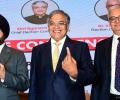
'The current Election Commission functions more like a government department than an autonomous body.'

The Supreme Court closed a plea by Goa Congress leader Ketan Bhatikar, who died from a snakebite, challenging the cancellation of the Ponda assembly bypoll by the Bombay High Court.

The Supreme Court has strongly criticised the West Bengal government's handling of an incident in Malda district where judicial officers were allegedly attacked. The BJP has accused the TMC of orchestrating the event to obstruct the Special Intensive Revision (SIR) of electoral rolls and protect Rohingyas.
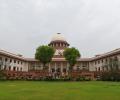
The Supreme Court clarified on Monday that it had not adjudicated on the new Form 6, used for inclusion in electoral rolls, during its hearing on the Special Intensive Revision (SIR) of electoral rolls in Bihar. This clarification comes after the Election Commission's press release suggested the apex court had upheld the Form 6 declaration.

High drama unfolded as INDIA bloc leaders, including Rahul Gandhi and Priyanka Gandhi Vadra, marched to the Election Commission headquarters in Delhi, demanding the resignation of Chief Election Commissioner Gyanesh Kumar over alleged irregularities in the Special Intensive Revision of electoral rolls and his misleading statements regarding Supreme Court observations on Form 6.

Former Supreme Court judge Justice Rohinton Fali Nariman has voiced serious concerns regarding the Election Commission's functioning, stating that the right to vote is 'at great peril'. He called for the Supreme Court's intervention to address 'disturbing developments' within the poll panel, particularly citing issues like voter disenfranchisement during electoral roll revisions and the controversial appointment process of Election Commissioners.

A panel of retired Supreme Court and High Court judges, part of an Independent Commission on Special Intensive Revision (SIR), held a public hearing on Thursday to address widespread deletions from India's electoral rolls. Testimonies from affected citizens, including a former MP and a Delhi resident declared deceased by the Election Commission, highlighted significant issues. The SIR process, initiated in 2025, has led to the removal of approximately 13 crore voters nationwide, with substantial deletions reported in Delhi and Uttar Pradesh.

Chief Justice of India Surya Kant declined a meeting request from opposition leaders Rahul Gandhi and Mallikarjun Kharge, stating that discussing sub judice matters would violate judicial ethics and the principle of Separation of Powers. He advised them to file a formal petition with the Supreme Court instead of seeking an administrative meeting. The opposition had sought to discuss issues including the Chief Election Commissioner, arrests, and public transport disruptions.

The Supreme Court has agreed to hear a plea challenging Section 16 of the 2023 election law, which grants immunity to the Chief Election Commissioner and Election Commissioners from civil and criminal proceedings for actions taken in their official capacity. This provision is being contested as unconstitutional, with petitioners arguing it provides "unprecedented, unbridled power" and blanket immunity for life.
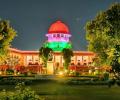
The Supreme Court has questioned the reliability of legislative majority as the sole determinant for political party ownership, especially when disqualification proceedings are pending against the very legislators forming that majority. This query arose during arguments concerning the Shiv Sena faction dispute between Eknath Shinde and Uddhav Thackeray.
The Election Commission has informed the Supreme Court that over 37 lakh appeals concerning deletions or inclusions in West Bengal's electoral rolls remain pending under the Special Intensive Revision. The apex court-appointed tribunals have disposed of only a fraction of the 38.20 lakh appeals filed, prompting the Supreme Court to seek data and a plan for streamlining the adjudication process.

The Eknath Shinde faction on Wednesday defended the Election Commission's decision to recognise it as the real Shiv Sena and allot it the bow-and-arrow symbol in the Supreme Court. Senior advocate N K Kaul argued that no subsequent Shiv Sena constitution was submitted to the EC after 2011 and emphasised the importance of inner-party democracy. The hearing, which also touched upon the timing of the EC's decision and the pendency of disqualification petitions, remained inconclusive and will continue on Thursday.

The Supreme Court stated it has not approved any modifications to Form 6, used for electoral roll inclusion, during the Special Intensive Revision. This observation came during the hearing of a Public Interest Litigation (PIL) challenging alleged unilateral decisions by the Chief Election Commissioner regarding changes to Form 6 and electoral roll revisions in states like Goa and West Bengal, without the concurrence of his colleagues. The court issued notice on the plea, highlighting concerns over collective decision-making within the Election Commission.

The Supreme Court has directed the Election Commission to resolve the contentious dispute between the rival factions of the All India Trinamool Congress over its party name and crucial 'flowers and grass' election symbol within three months of the completion of pleadings.
A curative petition has been filed in the Supreme Court challenging the September 23 split verdict on the Chief Election Commissioner and Other Election Commissioners (Appointment, Conditions of Service and Term of Office) Act, 2023. The petition, filed by Jaya Thakur, alleges a "reasonable apprehension of bias" due to claims that Justice Satish Chandra Sharma's son is a standing counsel for the Election Commission, raising questions about judicial propriety.
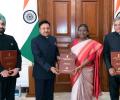
'They have been found wanting in taking stern measures to stop this because the Constitution has given them this authority and the power to ensure a free and fair election in the country.'

The Supreme Court has agreed to hear a Public Interest Litigation (PIL) next week that seeks the suspension of Chief Election Commissioner (CEC) Gyanesh Kumar and challenges the alleged unilateral decision-making within the Election Commission without the approval of two other Election Commissioners.

The Supreme Court has sought responses from the Election Commission and Chief Election Commissioner Gyanesh Kumar regarding a plea filed by Congress leader Rahul Gandhi and 12 other opposition leaders concerning alleged large-scale voter deletions and Special Intensive Revision (SIR) irregularities.

The Supreme Court is examining the Election Commission's decision to allot the Shiv Sena's bow-and-arrow symbol to the Eknath Shinde faction. The court questioned the validity of relying primarily on legislative strength, particularly when MLAs face disqualification. Arguments from the Shinde faction defended the EC's test, while the court raised concerns about the "sentiment of the symbol" for defectors and the practicalities of assessing grassroots support. The hearing remains inconclusive.

The Supreme Court is set to hear a plea filed by Congress leader Rahul Gandhi and other opposition figures on Thursday regarding alleged large-scale voter deletions and irregularities in the Special Intensive Revision of electoral rolls. The petition seeks an independent audit of these deletions and modifications, and a direction to prevent further deletions without due process.

'Election Commissioners are Constitutional authorities and they are not supposed to go to the Cabinet secretary. They are not supposed to write letters. And if they are aggrieved, they should straight go to the President of India.'
The Supreme Court will hear a plea on October 28 regarding the Special Intensive Revision (SIR) of Delhi's electoral roll. Petitioners seek transparency from the Election Commission on voter deletion reasons and a simplified re-inclusion process for those omitted, especially concerning Form 6. The court had previously raised concerns about "mechanical" notice issuance during the SIR, which led to 47 lakh voter deletions in Delhi.

The Supreme Court has issued notices to the Election Commission and the Centre regarding pleas alleging that the poll body made several decisions without the approval of the two election commissioners. The court stated it would annul any decisions found not to be in accordance with the law, while also refusing an interim order to restrain CEC Gyanesh Kumar from making decisions.

Former West Bengal Chief Minister Mamata Banerjee has filed a plea in the Supreme Court challenging the Election Commission's interim decision to freeze the Trinamool Congress' name and party symbol. The EC had allotted separate names and symbols to two rival TMC factions ahead of upcoming bypolls, a move Banerjee has strongly criticised as a "black day" for democracy.
'The Election Commission cannot be regulated by the government.'

The Election Commission replaced the inspector-in-charge of Nandigram police station, Ajay Kumar Mishra, with Debashis Sarkar a day before the bypoll, following complaints from opposition parties alleging Mishra's closeness to the ruling party. This move comes amidst heightened political scrutiny and concerns raised by opposition leaders regarding the fairness of the election process in Nandigram, a constituency with significant political history in West Bengal.

'To attribute motives to the individual election commissioner or the Election Commission as a group is very unfair.'

The Supreme Court is set to hear pleas challenging Chief Election Commissioner Gyanesh Kumar's alleged unilateral decisions without the concurrence of other election commissioners. The petitions seek his suspension and question actions like altering voter registration forms and handling electoral roll revisions in Goa and West Bengal, highlighting concerns over the multi-member character of the Election Commission.

The Opposition India bloc has threatened to initiate impeachment proceedings against Chief Election Commissioner Gyanesh Kumar, citing alleged irregularities in the Special Intensive Revision (SIR) of electoral rolls. This move comes as the Opposition plans a joint agitation and highlights the constitutional process for removing a CEC, which mirrors that of a Supreme Court judge.
The Supreme Court has questioned the Election Commission's decision to allot the Shiv Sena's bow-and-arrow symbol to the Eknath Shinde faction, asking if the possibility of denying the symbol to both factions was adequately considered. The court also raised concerns about using legislative majority as a test while disqualification proceedings against MLAs were pending. The Shinde faction argued for the validity of the legislative majority test, citing significant vote share and legal precedents.

The Supreme Court resumed hearing pleas challenging the Maharashtra Speaker's decision regarding the Eknath Shinde-led Shiv Sena MLAs and the Election Commission's recognition of the Shinde faction as the "real" Shiv Sena. Senior advocate Neeraj Kishan Kaul, representing the Shinde camp, argued that the EC has jurisdiction under Article 324 to examine a party's democratic character and organisational structure, especially when the Thackeray faction's constitution was not registered with the poll panel. He emphasised that the Shinde faction's case is based on a split within the political party, not just its legislative wing, citing cadre discontent. The hearing remains inconclusive.
